In part one, I described the solar filters used to protect the lens to be able to capture photos of the sun. However, when totality was reached, these filters block too much light to capture the event.
As soon as the light faded, I ripped off the solar filters and began capturing images of the total eclipse. Again, this was my Sony Alpha 7 iii camera with a 300mm lens.
The reddish pink spots on surrounding the moon are massive solar flares coming from the sun and you can see the light just starting to peak around the moon.
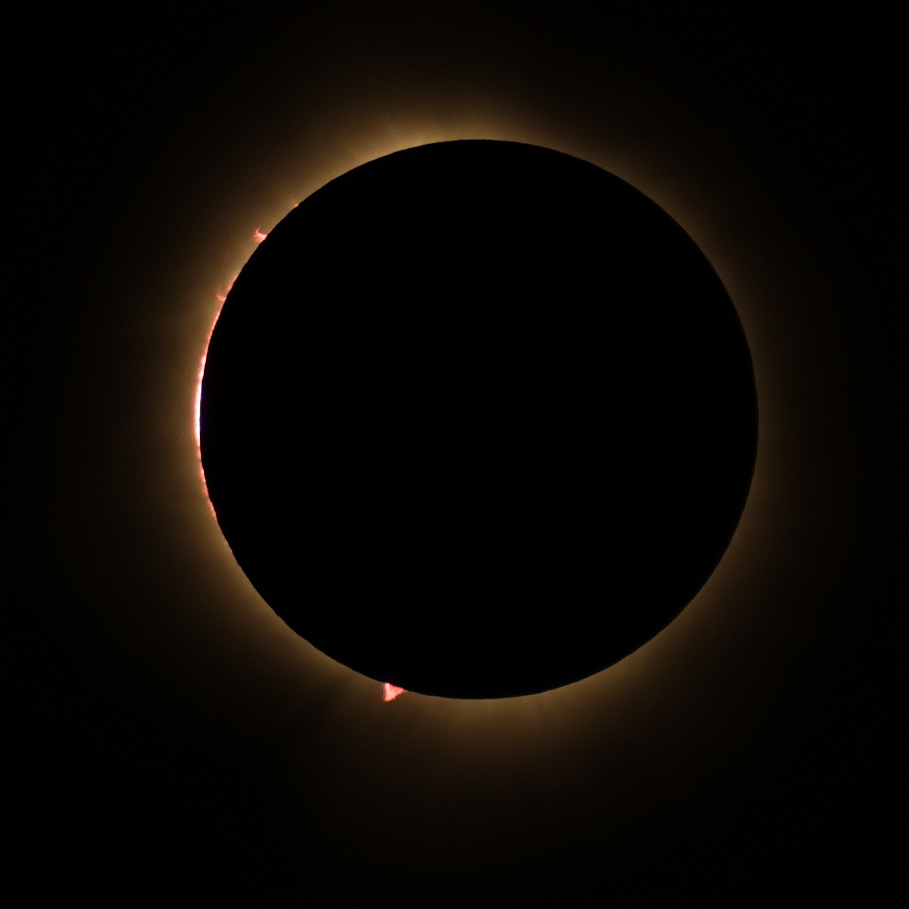

Absolutely incredible to witness this solar eclipse in person and to be able to capture it. With enough planning, I believe a larger lens (400 mm) would render even better pictures.
The images through my telescope showed the same details with incredible clarity- about twice as good as captured here.
Some mild post processing was done on these photos to increase the contrast (so I the solar flares where more visible) in lightroom.
Want to see more? I would highly recommend Andrew McCarthy’s photography work which can be found HERE. His photos are by far the best I have seen taken during this event.




 Photography by Chris
Leave a comment